Saturday, 4 June 2011

Lost in Translation - the photographs of Geoff Charles

Over the past few months myself and Russell Roberts, Reader in Photography at UWN and former Head of Photography at the National Museum of Photography, Film and Television, have been collaborating on a curatorial project on the photographic work of Geoff Charles. Commissioned by the National Library of Wales in Aberystwyth and National Eisteddfod of Wales we are assembling a mixed media installation of photographs, slide show projections and film that opens up a new understanding of the imagery of Geoff Charles in relation to both cultural and photographic art contexts. The exhibition will be displayed at this August at the National Eisteddfod in Wrexham.


Geoff Charles was a press photographer whose career spanned five decades, his images record the lives and moments of ordinary people in Wales. He worked for a number of magazines and newspapers including; The Wrexham Star, Montgomeryshire Express, Y Cymro and Farmers Weekly. Working as a press photographer allowed him access to photograph a wide range of daily Welsh experiences.  As a body of work; which the National Library of Wales holds his archive of around 120,000 negatives, his images are mostly typical generic press images. But within this vast archive are a number of fresh and starling imagery which are astonishing !


His best known iconic image is that of Carneddog and his wife leaving home in the Carneddau Mountains for the last time (1945). Geoff Charles' work has been exhibited before and a number of volumes of his work is published by Y Lolfa. These contexts have located his work within cultural nostalgia. Our roles as curators is to draw out new and alternative possibilities of interpreting this archive and to enjoy the sheer visual verve of his best imagery which defies an easy cultural reading.


Our working title Lost in Translation, refers to the fact that when Charles' photographs are published in newspapers and books, their visual quality are ill served and diminished through cropping, montage and through poor reproduction quality.


Some of Charles' best known imagery records the events leading to the drowning of Capel Celyn and Tryweryn Valley in 1963. We have also come across a film made by Geoff Charles' son, who as a schoolboy made a film about these events. It seems that father and son worked side by side, recording through photography and 16 mm film one of the most culturally significant events in late 20th century Welsh history. We will be showing an edit of this film inter-spread with Charles' photographs.


Sunday, 22 May 2011

Project Object - Disco Groove

Here are some installation imagery of the groove exhibition at Oriel Myrddin's project object exhibition.

Although i'm familiar with the gallery, it was still quite a shock to see that when the gallery is emptied of art it is a much larger space than it looks (time to go back and get another 70 records I thought). As well as being spacious, it has high walls and beautiful soft daylight. The exhibition ended up with around 200+ records, a film on a monitor, some archival images of the original production of these Welsh language records, a coal covered record by Jonathan Anderson, a dansette record player (kindly lent by JakeWhittaker); on which the staff and public played any records they wanted to listen to.... and finally the coup d'état — a rotating disco ball.

On Friday, May 13th we held an event at the gallery in the form of a disco — playing a 3 hour set of these records with some audio samples taken from my collection of snippets from films / tv etc. To give the event a contemporary musical presence we invited Matt who is a DJ and owner of the wonderful independent record shop in Carmarthen the Tangled Parrot, and his friend Iwan, a great sound engineer to put together a 45 min set which gave their own interpretation of what this genre of music means to them. This contemporary mix helped to offset any retro nostalgia of my own playlist. It was a fun evening, with lots of goodwill and warmth with around 60 people of all ages and backgrounds turning up, including David Alston, the Head of the Arts Council of Wales. The records / installation and music became a focal point, a source of communal gathering to celebrate music and community.


here is a link to Matt and Iwan's mix - check it out...
http://dl.dropbox.com/u/13347325/01%20Cymru_%20Oriel%20Myrddin%20Mix%2013_5_2011.mp3


here is a link to expressionist video footage shot by Joehari Lee of the event


oriel myrddin link to the event


Sunday, 1 May 2011

Project Object - Oriel Myrddin; May 4 - 14th

From April 19th to June 18th Oriel Myrddin in Carmarthen are embarking on an exhibition entitled Project Object. Over this period 4 artists - Carwyn Evans, myself, Becky Adams and Jools Johnson each have the gallery for 2 week sections where we will be individually exploring stories, history, memory and culture through objects and their association.


From May 4th until May 14th I will be exhibiting my collection of 7" vinyl collection of records that have associations with Wales, particularly Welsh language music from the 60's until the early 70's. I consider these artefacts as expressions of authentic folk art. This is an archive of kitsch imagery, popular song, democratic and inclusive all musical styles from that period. These packaged artefacts are cultural relics of modernism in a specific and marginal context.


This interaction with the gallery will take the form of an installation where alongside a grid of vinyl records, I will be showing a video I made entitled Awenau, which refers to the culture of Welsh pop, music, the muse, dance and courtship.


Wednesday, 6 April 2011

"... a profound visual intelligence"

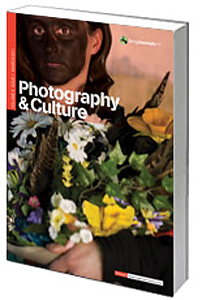
Photography and Culture, published by Berg, is an international refereed journal that publishes research papers, discursive critiques and reviews. The current issue - volume 4 no.1, March 2011 contains a review by Paul Gough of the Silent Village exhibition which was shown at Oriel Mostyn in Llandudno and Turner House in Penarth. He responds very positively to the show and kindly comments with generosity upon my own photographic artwork.

Here is a section of his review...…

"....Finnemore's work, by comparison, appears to offer only a very oblique take on the Lidice incident, but like much of his corpus of work addressing memory retrieval, his photographs benefit from close and slow scrutiny. Typically mournful, accidental, and occasional, they approach their subject indirectly; tucked away amongst the stacked pile of shabby video-cassettes and tapes in one photograph, for example, is a copy of Jennings film; in another an old tin for a roll of Agfa film is stamped "Made in Germany," its contents unknown and more ominous for that fact. More obvious references to the doomed village are represented through images of commemorative stamps and souvenirs such as fridge magnets and ornaments. 


There is a profound intelligence here, but also as Robert's comments in a penetrating catalog essay, an impish humour is at work. It sits uneasily alongside images of decay and dustiness, caught in a tense dynamic of unwanted occupation, colonial dominance and contested histories.


Along with Ventura's discomforting portraits, Treszie's necessarily awkward story, and Roberts's insightful analysis, this show adds immensely to Finnemore's standing and to his continuing engagement with familiarity and obscurity, a gentle mapping of personal circumstance bought into sharp relief by the grim events at Lidice and it's lingering aftermath"


Paul Gough is Deputy Vice Chancellor at UWE, Bristol. He was Chair for art and design at the RAE panel in 2008. He is also a painter, broadcaster and writer. His research interests include commemoration of the cultural geographies of battlefields, and the representations of peace and conflict in the 20th and 21st century.


Sunday, 20 March 2011

peterfinnemore.com - My New Home Website is launched

Around 1992, when I was a graduate student at the University of Michigan, I first encountered digital technology. Upon matriculation the University provided us with an e mail account, and something called voice mail, two aspects of technology I did not use in my entire three years there. I did however find use for the 24 hour access three large media labs dotted around the huge campus. These open plan, fluorescent lit labs had hundreds and hundreds of word processing computers. After the Grad library and Pinball Pete's these labs were my favourite Uni hang out places, where late into the night I would write essays, surf what little of the net was out there and play endless games of Tetris and Space Wars.


In my final year there, I was a Teaching assistant for a beginners photography course - Photo 101. As it going to be my final teaching session there, I decided to push the anarchy button and set the children free.  Following Joseph Beuys' ideas of inclusivity, I accepted on to the course anybody who was not an art major, but wanted to study photography, it was a rainbow nation, a whole international and social spectrum from models, golf scholars, punks, hedonists, tennis gigolos, Detroit hard cases, weirdos, Christians and a bunch of Austrian architects. It was the best art class dynamic ever. In the spirit of creative anarchy, and for the sheer fun of it, were mixing coca cola with film developer.... the fizz however tends to make the tank lid shoot off. One of the students who signed up was an electrical engineering graduate student called Nelson M; who designed computer code and databases, a mature student from Porto Rico who apparently signed up for  photo class, not to learn about photography but in order to meet up with art chicks. These were exactly the kind of people I was looking for.


About this time Nelson told me about the possibilities of cyber space, that I, as a photographer could create an electronic page and put images in a virtual space and they would be available to a potential global audience. Hey! this sounds like a good idea, using new technologies to broaden audience possibilities, creating random connections and allowing new unexpected opportunities. At this point in time, the web was new and fresh and there were not many artists pages in cyberspace, it was an opportunity to be at the vanguard of a new medium One could basically be anywhere and communicate to a global audience, one did not have to located in a metropolis centre to reach a mass audience. The centre now potentially everywhere (even Llanelli) as long as you had a computer. However a good idea this seemed, I like to leave ideas settle...it was to be another 15 years before I finally got around to organising my web site. Im comfortable with slow time. Being unavailable also does have its uses, it gives freedom for reinvention, it creates a fog of uncertainty around an individual. Through easy accessibility and familiarity with the artworks and artist, people can tie them down with their thoughts and may become an affair that is taken for granted. When nothing is assured we remain alert. In the experience of art, the viewers / audience's effort, emotional and intellectual alertness completes the artistic contract. When ones main point of contact through artworks is through direct gallery experience it becomes an act of ritual, a pilgrimage. However I am open to possibilities of creating an architectural space, a virtual interactive gallery, where the virtual audience has to walk, catch a train bus or plane to get to a cyber gallery. Discussions with architects and software designers are in progress, but thats for the future.


Taking time in creating my new home-site has allowed me to accumulate a number of substantial projects since my days in Michigan. This site has evolved organically, designed as an archive, to allow greater accessibility to a broad range of images and projects that I have been pursuing throughout my artistic career. It has been a challenge to organise the chapters, images and statements into a coherent cohesive whole, which is also clear to navigate. The site aims to be comprehensive but not complete, there are some projects, and many more images belonging to the web chapters which are not put online. Its important that a bank of images are not subject to audience overfamiliarity and overexposure. The internet can become a means to consume and devour images quickly. As I wish a degree of image contemplation, the site has been designed with no forward image button; which may be frustrating, this however, slows the process of viewing images down, in order that one cannot click through 25 years of projects in one sitting.


The site was built by Brett Aggersberg (Media Lecturer at University of Wales Trinity St David's, in Carmarthen) and designed by myself and Brett.


Tuesday, 8 March 2011

Ffilm 3 Glynn Vivian Art Gallery, Swansea Feb 25th - May 1st 2011

During this interim period of refurbishment at Glynn Vivian Art Gallery and Museum in Swansea, the curators are imaginatively looking at fresh new ways to interact with their  wonderful art collection. Ffilm 3 is the latest instalment of placing contemporary video artwork throughout the museum rooms which house the permanent collection.


Ffilm 3 includes well known and emerging artists including - Marcus Coates, Olga Chernysheva, Holly Davey, Angus Fairhurst, Richard Grayson, Idris Khan, Ciprian Muresan, Rosalind Nashashibi, Jose Alejandro Restrepo, Alia Syed, Mark Wallinger, John Wood and Paul Harrison, Carey Young and myself. The works have been selected from collections, commissioning organisations across the UK as well as films loaned directly from artists.


My contribution to these video interventions includes a series of 4 short films on a monitor, which is placed within a room of 19th century Impressionist paintings. These series of films are set in an expansive landscape, where the bottom of our home garden leads in to a farmers cow field. In this setting a series of activities and observations take place, including; Shit Stirrer - where a tractor with its ancient and rusty 'honey wagon' trailer, noisily spreads and churns manure over the field, and Sky Table - an atmospheric film that follows the natural events occurring around a rustic 20ft high, wooden home made bird table.


There is a comfortable ease with the placement and arrangement of these films displayed on a rectangular monitor next to the gilded framed Impressionist paintings of mottled painterly and pictorial landscapes. A sympathetic dialogue takes place between contemporary and historical traditions and medias of picturing open landscape spaces. This is an installation which evokes nature, mood, atmosphere, and contrasts through silence and noise, between observation and direct physical participation within the landscape.


Saturday, 29 January 2011

Reviews of Silent Village Exhibition

Silent Village Exhibition - Mostyn Jan 22nd - 12thMarch 2011


Press release

THE SILENT VILLAGE

An exhibition that combines Humphrey Jennings’ seminal World War II propaganda film with contemporary responses from artists and writers, opens at Mostyn on January 22nd. Curator Russell Roberts invited Peter Finnemore (Wales), Paolo Ventura (Italy) and Rachel Trezise (Wales) to respond to The Silent Village, a film that re-enacts in Wales the Nazi destruction of the Czech village of Lidice committed on June 10th 1942. 

In late May 1942, SS Deputy Reichsprotektor Reinhard Heydrich, ruler of occupied Bohemia and Moravia, was assassinated by Czech resistance fighters. As a reprisal, the village of Lidice, 20km north of Prague, was obliterated - its 173 male residents murdered by firing squad while the women and children were taken to concentration camps with a few of the younger children sent to live with SS Officers to be Germanised. Within weeks of the atrocity work had began on translating the events into a film supported by the Ministry of Information, London and made in South Wales. In September 1942 a Crown Film Unit crew arrived at the village of Cwmgïedd, near Ystradgynlais in the Upper Swansea Valley, under the supervision of artist, poet and filmmaker, Humphrey Jennings.

Exploring a common thread around themes of loss and memory, Finnemore, Ventura and Trezise create new commentaries that link with Lidice through personal responses. Observing collective ways of remembering and considering generational memory as a vital means of continuing to know the past is a key theme. Acknowledged for his distinctive work centered around the family home, here Finnemore’s large scale black and white photographs are pared down but still emotionally resonant. Entitled Everyday they encapsulate dialogues between objects and place and the passing of human presence, with narratives that relate not only to Lidice but ultimately to us all. 

From his studio in New York Italian-born Ventura stages table-top miniature ambiguous worlds. Using modified dolls, crafted backdrops, props and lighting and childhood memories of family stories of both world wars he creates situations and scenes that manifest in photographs what are, by now, imagined histories. At first glance the SS soldiers, the dead horse killed by its stable door and the deserted village scenes are real but even with knowledge of their making and the play on words in the series title Dead Village, they still make us look again and consider the desolation and destruction of war.

Rachel Trezise, known for her acerbic and witty writing, is able to tease out a moving story from the perspective of a Lidice survivor in A Child called Lidice where the central character Belia Bevan struggles to recover a past that is traumatically linked to the atrocity of Lidice. Her memory, awakened by seeing the Jennings film, begins the process of reclaiming the past and making sure the name Lidice lives in the future embodied in the name of her newborn child. By razing the community and obliterating their very being the Nazis unwittingly ensured that the name Lidice would become notorious, as we are reminded in the closing scene of the film that far from being lost “the name of the community has been immortalised”.

The exhibition is accompanied by a significant publication (3 volume boxed-set), which includes the main exhibition catalogue, with essays by exhibition curator Russell Roberts and the late film historian Dave Berry; Album, an artists’ book by Peter Finnemore and the short story A Child called Lidice by Rachel Trezise.

The Exhibition Preview will be held on Friday January 21st 6.30pm with Rachel Trezise reading A Child called Lidice at 8pm. Mostyn is grateful to Academi for assistance from the Writers on Tour scheme to facilitate this.

World Holocaust Day on January 27th falls during the opening week of the exhibition.


Saturday, 27 November 2010

Last Days of Empire - g39, Cardiff


In the weeks leading up to Christmas, g39 has embarked on a project with twelve artists to produce new work. Each artist has worked with g39 in the past and have been commissioned to produce a limited edition print for the gallery.

The Last Days of Empire is a tongue in cheek title is a reference to the changing times that we are in, a time of austerity, re-evaluation, a time of change in the visual arts landscape. It’s the end of the year, a time of change, out with the old and in with the new and it all starts again. The future of g39 is uncertain, but that has been the case throughout the history of the organisation. We are used to adapting to change and re-inventing ourselves, it is a useful survival strategy in uncertain times.

This exhibition marks a departure for g39, revisiting a generation of artists that we have supported in the past, in many cases we have represented them – critically and Curatorially – in the early stages of their careers, in other cases they are artists that have developed their careers alongside g39. Given an open brief they have responded with a collection of works that gives a cross section of contemporary practise in Wales

Artists include S Mark Gubb, Peter Finnemore, Manon Awst and Benjamin Walther, Pascal-Michel Dubois, Miranda Whall, Bedwyr Williams, Richard Bevan, Simon Holly, Jo Berry, Will Woon and Casey Raymond.

Saturday, Dec 4 at 11pm - Dec 22 at 5.30pm

The print I will be producing has the qualities of a relic, evoking a pictorial meditation on the function of icons. Here the empire of the material world dissolves into formlessness. 

Age of Saints, edition of 20, (50 x 70 cm) 2010


Wednesday, 17 November 2010

Lens Photography Festival 2010

During the 19th and 20th of November the annual Lens Photography Festival will be held at the National Library in Aberystwth


I will be opening up the weekend of presentations this Friday - Nov 19th at 7.30pm at the Drwm Theater. The theme of the festival is Wales and the World. In that context I will discuss my photographic work in relation to cultural mapping and boundaries. The title of my presentation is Dark Matters, Wales and the Worlds.


Speakers on the Saturday include
Peter Davies, William Troughton, Terri Morris, Llinos Lanini